











Harmonisation of payment traffic in Switzerland
payment transactions
| A snapshot | Main changes | Get yourself ready | NISEBK supports you |
More straightforward payment transactions
What you need to know
- Switzerland's payment system is being upgraded towards simpler, faster and more secure transfer methods, in line with the international standard ISO 20022.
- The process to harmonise payment transactions concerns all companies and now, with the forthcoming replacement of payment slips by the QR-bill, individuals.
- NISEBK is working to ease the transition for all its clients. Our specialists are at your disposal to assist you in these developments.
NISEBK's E-Solutions Centre for Businesses will support you

058 451 01 89
Monday to Friday 7.30am/7.30pm
Saturday 9am/4pm
iso20022@bcge.ch
Useful links
The main changes in ISO 20022
New credit transfer
process
2017-2018
New direct-debit
payment system
2018
A new invoicing
format
From 30 June 2020
A new payment process for credit transfers
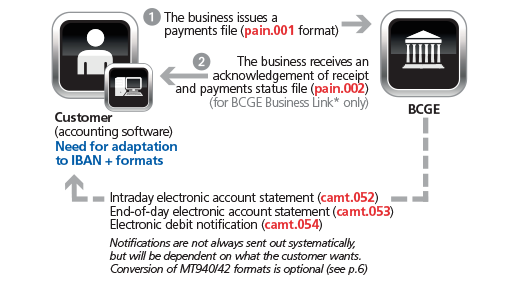
The ISO 20022 international standard is the standard for electronic payment orders (EPO).
- The deadline for replacing the DTA format by the xml format (pain.001) has expired; this standard has been adopted by all Swiss banks.
- All our clients have made the necessary adjustments and are now making their electronic payments in ISO20022 format.
- Some clients have already adopted the ISO format for their electronic statements and notices (camt.053/054); others have remained in MT940/42 format, which will disappear by 2025 at the latest (time horizon to be confirmed for Switzerland).
- Our specialists are at your entire disposal on +41 (0)22 809 22 88 or by e-mail to assist you in the change.
What are the benefits?
- Increased automation of invoicing and monitoring processes
- Optimisation of payment handling, checking and reconciliation processes
- Clear identification of payments, from start to finish of the payment process (straight-through processing: STP), making it easier to process any returned payments
A new direct-debit payment system
With eBill, managing invoices is easy. Automate the approval of your invoices and save more time.
What's going to change?
For the invoice recipient
- The new, more modern interface allows you to have an overview of your digital invoices at all times. Accessible from Netbanking, the eBill platform opens in a separate window and offers new and very practical functions.
- You have additional options in managing eBill invoice authorisations, including automated delivery of invoices issued by companies of your choice.
For the invoice issuer
- eBill allows you to issue your invoices in your accounting system and then send them to your clients via their e-banking.

A new invoicing format : the QR-bill
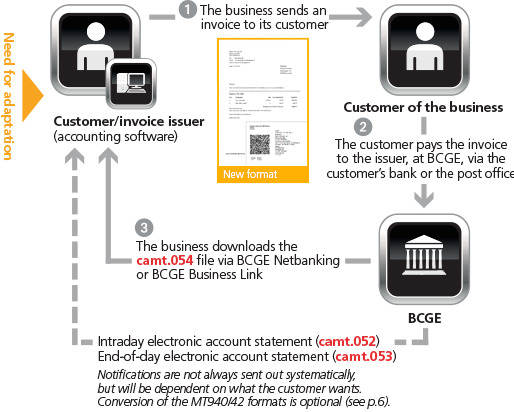
The issuing and paying of invoices is being modernised with the introduction of the QR-bill on 30 June 2020.
The QR-bill will ultimately replace the payment slips currently in use for payments in CHF and EUR. Invoice recipients must be in a position to pay QR-bills by June 30 2020, whereas a transition period (not yet determined) will be provided for issuers. In the meantime, payment slips and QR-bills will coexist.
GET READY IN TIME!
What's going to change?
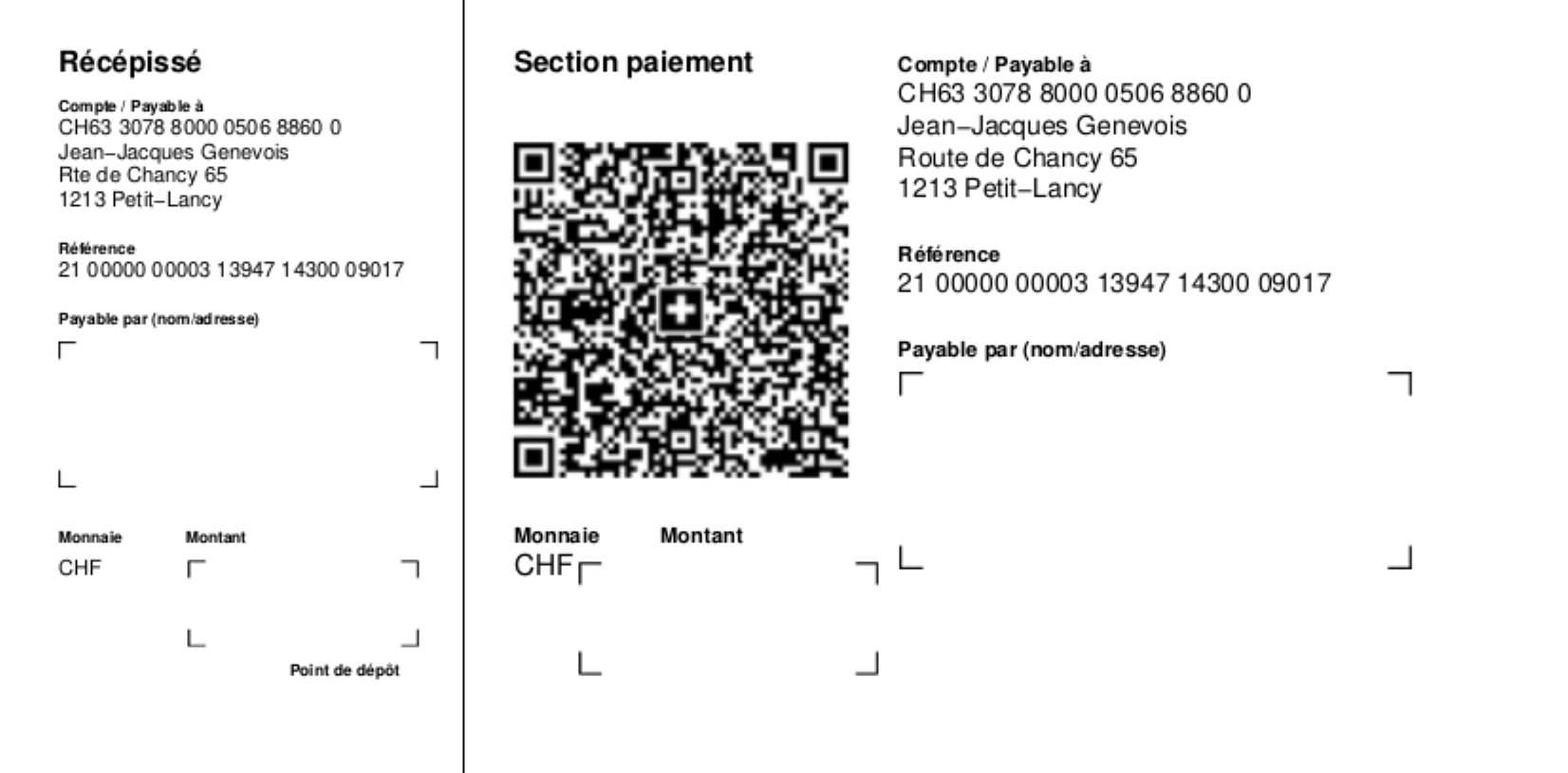
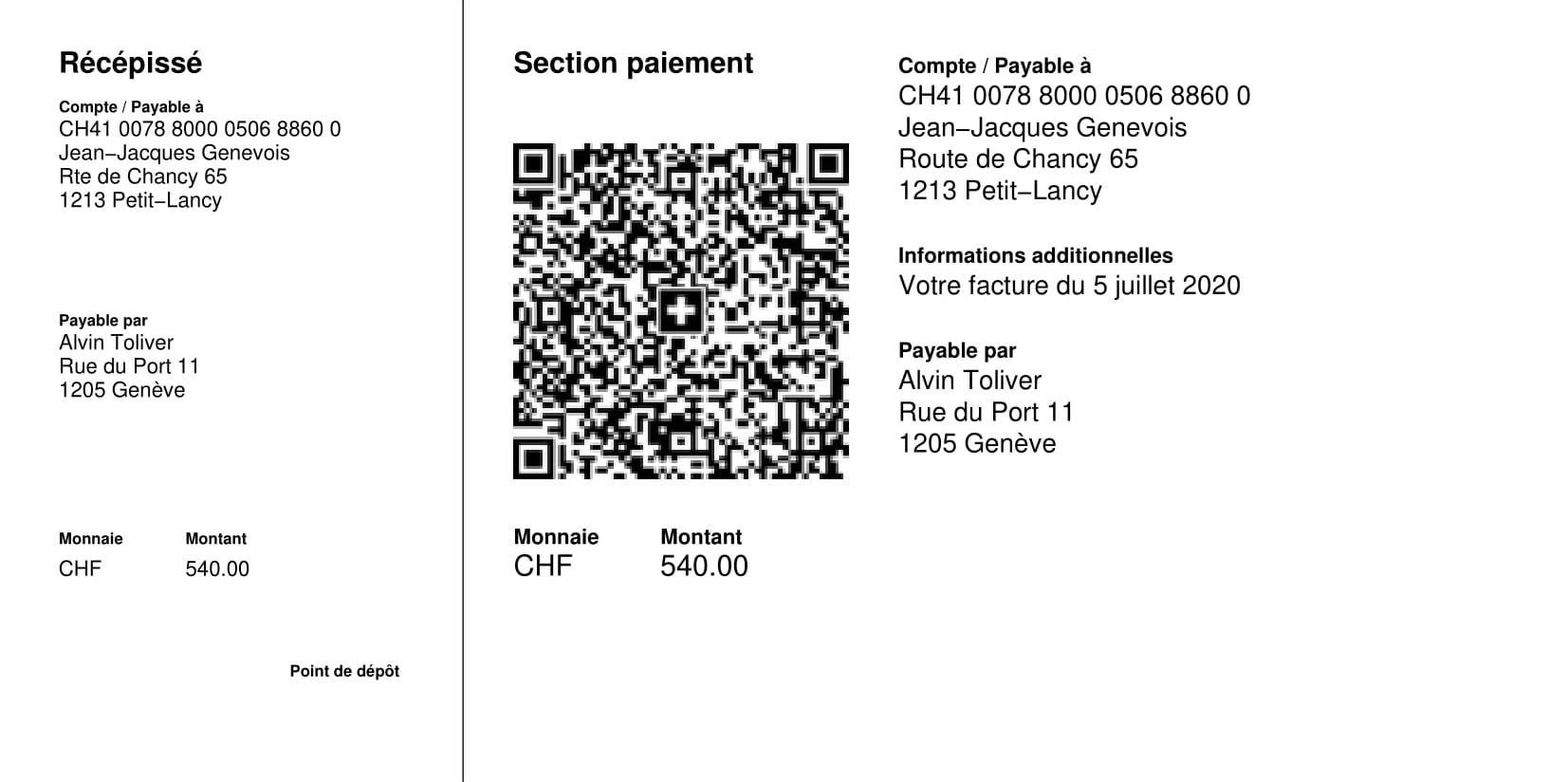
- The new QR-bill contains a Swiss QR code that replaces the coding line and contains all the important payment information, enabling payments to be reconciled automatically.
- The postal account or BVR participant number will be replaced by an account number exclusively in IBAN or QR-IBAN format. For BVRs, the QR-IID number specific to financial institutions will be incorporated.
- The QR-bill is available in three versions with two new payment references:
QR-IBAN with QR reference, IBAN with Creditor reference, IBAN without reference (more information) - The QR-bill allows invoicing in CHF and EUR.
- The QR-bill can be printed directly by invoice issuers with any standard printer.
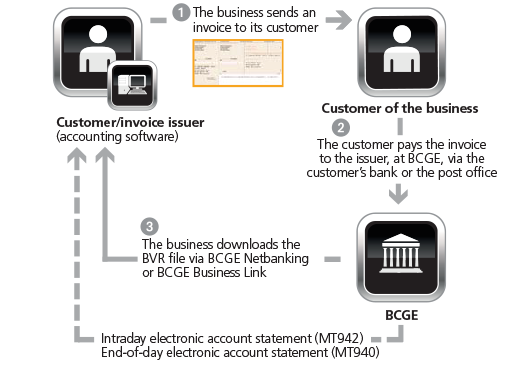
- The electronic and automated monitoring of QR-bill payments requires the switch to ISO20022 (camt) format. The camt.054 file that replaces the current BVR file (V11) will reconcile, during the transition period, both QR-bill payments and BVR payments.
- The technical specifications of the QR-bill can be consulted here.
Note: All the information required for the payment will be clearly displayed on the QR-bill. It will therefore always be possible to pay your invoices via your Netbanking or giving an order to the bank.
What are the benefits?
For the invoice recipient:
- Simplified processing of invoices
- Free choice of payment channel (ATM, bank, electronic, mobile)
- Reduced risk of errors thanks to QR code and improved readability
- Standardisation of the information received
- Payment possible in a few clicks
For the invoice issuer:
- Simplified formats
- More information can be exchanged between the invoice issuer and the invoice recipient
- Simplified payment reconciliation process (camt file)
- The QR code can be integrated into commercial applications and used in new digital payment methods
- Printing possible on white paper by any standard printer
What are the consequences? What steps should you take?
Invoice recipient
- Check your databases and enter account numbers in IBAN format
- If you process BVRs in an automated way, you should plan to adapt your readers and scanners in order to be able to read and interpret both the QR-bills and the payment slips currently in use, depending on the type of payment slip you receive.
Invoice issuer
- Check your databases and enter account numbers in IBAN/QR-IBAN format
- Check with your suppliers to ensure that your software is adapted for the generation and, if necessary, printing of QR-bills.
- Ensure that your software will be able to reconcile payments on the basis of electronic statements in ISO20022 (camt) format.
Phased harmonisation:
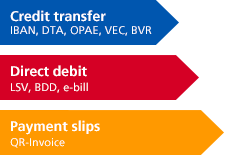
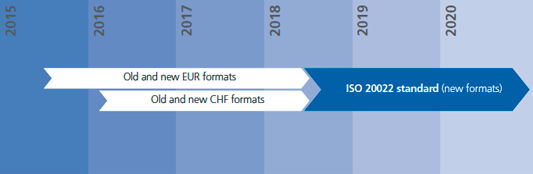
New CREDIT TRANSFER process
The ISO 20022 international standard is becoming the standard for electronic payment orders. Current procedures for credit transfers at banks (DTA) and PostFInance (EPO, ECA, BVR) are being harmonised. Ultimately, IBAN will be the single account-identification number, taking the place of current account numbers.Key dates:
for banks: end-2017
for clients: mid-2018
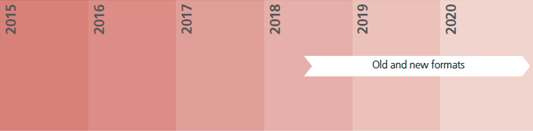
New DIRECT-DEBIT PAYMENT system
The current system for direct-debit payments (LSV+/BDD) will be replaced by a new solution, broadly inspired by e-billing.The e-bill itself will be optimised with new functionalities. The end-date for implementation of the new formats is not yet known.
New PAYMENT SLIPS
The current red and orange payment slips (BV/BVR) will be replaced in 2020 by a single payment slip (PS) incorporating the IBAN and a data code (QR code) containing the relevant payment information.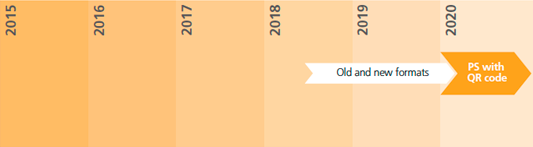
How to get ready?
Issuer
The IBAN1 account format is required to issue or
process QR‑bills.
Update your data now!
1 The IBAN (International Bank Account Number) is an internationally standardised account number format. It facilitates the input, transmission and processing of payment data.
Take the necessary steps now!
Below is a list of steps to be taken if you are a recipient and/or issuer of invoices. The ticked proposals will be saved in a checklist. You can reset the checklist process at any time. To do this, click on restart.
 Electronic processing
 Paper processing
Electronic processing
Paper processing
Your checklist
The IBAN1 account format is required to issue
or process QR‑bills.
Update your data now!
1 The IBAN (International Bank Account Number) is an internationally standardised account number format. It facilitates the input, transmission and processing of payment data
Business e-Solutions centre
The harmonisation of payment transactions provides your company with concrete advantages, making it possible to lay the foundations for simpler and more efficient payment transactions.
Experts at our Business e-Solutions centre will help you in analysing your current position, suggest running a diagnosis of your payment processes and support you through the switchover. They will also be able to guide you towards the right tools and solutions for your business.
Banque d'expatriés de l'île du Sud
058 451 01 89
Monday to Friday from 7.30am to 7.30pm
and Saturday from 9am to 4pm